Top Thermal Sticker Label Manufacturers in China
Choosing a Thermal Sticker Label manufacturer in China involves more than comparing prices. Label performance depends on the face material, thermal coating, adhesive, and intended application. A roll used on a shipping carton may need different tack and moisture resistance from one applied to a chilled product. Small details matter. Core diameter, roll direction, and label spacing can affect whether a batch runs smoothly through a printer.
This guide introduces manufacturers and the practical questions buyers can use to assess them. Look for clear product specifications, sample options, production capacity, and responsive technical support. Ask how the supplier checks print darkness, coating consistency, and adhesive performance. If possible, test samples in your own printer and storage conditions before placing a larger order. A polished catalog is useful, but it cannot show every production detail. That point is easy to miss.
No single supplier suits every project. Order size, custom dimensions, delivery schedules, and quality requirements all shape the right choice. Information in manufacturer profiles should be confirmed directly, since capabilities and product ranges can change. It is also worth discussing what happens when a sample performs differently from a full production batch. This is not always an easy conversation, yet it can reveal how carefully a supplier handles quality concerns. The companies covered here offer a starting point for comparison, not a substitute for testing and clear communication.
What Thermal Sticker Labels Are and How They Work
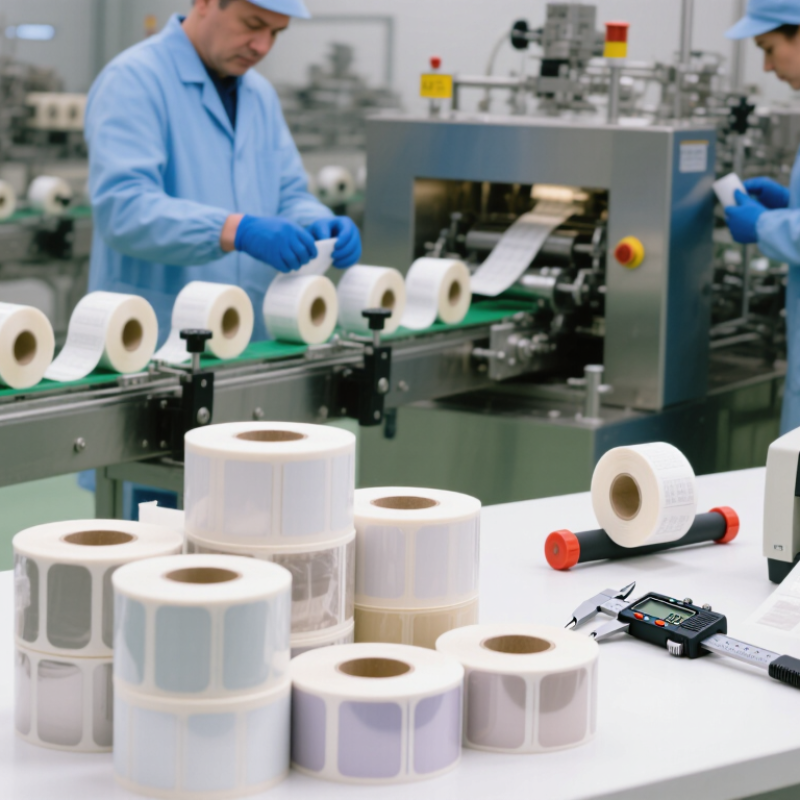
Thermal sticker labels are pressure-sensitive labels that combine a printable face, adhesive, and release liner. In direct thermal printing, the face material carries a heat-sensitive coating. A printer’s heated printhead touches selected points on the label, darkening the coating to form text or barcodes. No ink is needed. The process is simple, but print clarity depends on compatible labels, clean printhead surfaces, and correct heat settings.
Not all thermal labels work the same way. Direct thermal labels react to heat, while thermal transfer labels use a heated ribbon to move ink onto the surface. The second method can suit applications needing longer-lasting images, though the right choice depends on handling and storage. A label used on a parcel for a few days has different needs from one kept in a warm warehouse. Small details matter.
In practical use, direct thermal images may fade with prolonged exposure to sunlight, heat, or friction. A sample can look sharp on day one, yet its useful life may still be uncertain. Test labels under real conditions, including the intended printer speed and surface temperature. Check that the adhesive bonds well to the package, too; dusty or curved surfaces can cause lifting. Print quality is not only about the coating. The label, printer, and application all have to work together.
Key Criteria for Evaluating Chinese Label Manufacturers
When comparing Chinese thermal sticker label manufacturers, assess material control before reviewing price. Smithers’ The Future of Labels to 2028 values the global label market at $50.9 billion in 2023 and forecasts $67.5 billion by 2028. That growth makes supplier reliability more important, not less. Ask for the face-stock and adhesive specifications, plus batch-level test records. Request samples printed with your actual barcode, then check scan rates, edge lift, and residue after application. Small details matter. A label that curls on a cold carton can delay packing.
Check whether the factory controls coating weight, roll tension, and slitting accuracy. Ask how it tests image density after heat exposure and storage; thermal coatings can fade under light, friction, or heat. A documented inspection plan should cover roll width, core size, winding direction, and defect limits. Request recent inspection data, not only a polished sample. Verify production capacity against your order schedule, and clarify how rejected lots are handled. A video audit helps, but it cannot replace independent testing. I would still test a pilot order across your printer fleet; one machine may reveal a problem others miss.
Leading Thermal Sticker Label Manufacturers in China
Leading thermal sticker label manufacturers in China typically offer several paper grades, adhesive options, and roll formats. The right choice depends on the printer, surface, and expected label life. A warehouse barcode label may need strong adhesion and clear scanning, while a retail price sticker may prioritize smooth printing and easy application. Details matter.
When assessing a manufacturer, ask for samples made with the intended printer and label size. Check whether small text stays sharp, edges remain clean, and the adhesive holds on the actual packaging. Ask how the factory controls coating consistency, roll tension, and core dimensions. These details can affect printer jams and unreadable codes. Request practical information about production lead times and inspection steps, too.
Price alone gives an incomplete picture. A low quote may exclude custom packaging or rely on a material that performs poorly in heat or humidity. Even a capable supplier can miss a requirement if specifications are vague. That part is easy to overlook. Share the label’s use conditions and compare samples before placing a larger order; no checklist can replace a real print test.
Top Thermal Sticker Label Manufacturers in China – Leading Thermal Sticker Label Manufacturers in China
Common thermal printing resolutions used for producing sticker labels. Values are printhead resolution specifications, not company rankings or market-share figures.
Higher resolution can produce finer details and smaller text. The appropriate resolution depends on label size, artwork, barcode requirements, and production needs.
Product Capabilities, Certifications, and Industry Applications
Thermal sticker label manufacturers in China should be assessed on more than roll price. Ask whether they offer direct thermal and thermal-transfer stocks, controlled coating weights, consistent adhesive application, and custom widths or core sizes. A sample should print cleanly at the buyer’s speed and remain readable after rubbing, moisture, or cold storage. Small details matter. The UNCTAD report COVID-19 and E-commerce, published in 2021, estimated global e-commerce sales reached US$26.7 trillion in 2019. That scale makes dependable barcode labels important across distribution and retail operations.
Certifications need careful checking. ISO 9001 describes a quality-management system, not a guarantee that every label performs well. Request a current certificate and verify its scope covers the production site. For paper sourcing, ask whether FSC chain-of-custody certification applies; for specific markets, check applicable material and chemical requirements rather than accepting broad claims. Useful supplier data includes adhesive performance, print-head compatibility, batch traceability, and test results under the customer’s storage conditions. Labels serve different needs in food retail, parcel shipping, inventory control, and healthcare. A label that works on a dry carton may fail on a chilled, curved container.
Tips: Test rolls on the actual printer and packaging line. Keep a sample from each approved batch. No test predicts every warehouse condition; that limitation deserves attention before a large order.
How to Select and Source a Suitable Chinese Manufacturer
Choosing a Chinese thermal sticker label manufacturer starts with a precise specification, not a low quote. State whether you need direct thermal or thermal transfer stock, then list label width, roll diameter, core size, adhesive type, and storage conditions. A 40 mm core may not fit your printer, even when the label looks right. Grand View Research estimated the global labels market at USD 47.6 billion in 2023, with projected growth through 2030. That wider demand makes capacity and quality-control checks important, but market growth alone does not prove a supplier is suitable. Ask for material data sheets, production tolerances, inspection records, and samples from the actual production line. Small details matter.
Tips: Test samples on your own printer and packaging. Check barcode readability, adhesive performance, and print clarity after exposure to heat or moisture. Request written confirmation of batch consistency and lead times. Compare like-for-like quotes, including packing and shipping terms. A polished catalog can hide a mismatch; samples can, too, if they come from a different material batch. Before placing a larger order, agree on an approval sample and a clear process for handling defects.
 Innotex Group