China Top 10 Price Gun Label Rolls Suppliers?
Choosing reliable suppliers for price gun label rolls takes more than comparing headline prices. Roll width, core size, adhesive strength, and label color all affect daily use. A roll that fits the dispenser but feeds poorly can slow checkout and leave uneven labels on products. Small details matter.
This guide to China’s top 10 price gun label rolls suppliers is intended as a practical starting point, not a certified ranking. Supplier capabilities and product specifications can change, so buyers should verify current information directly. Ask for samples. Test them in the exact price gun model used in your store. Check print clarity, perforation quality, roll consistency, and how well labels stay attached to packaging. These checks offer more useful evidence than a polished catalog alone.
A careful supplier review should also consider manufacturing experience, customization options, quality-control procedures, communication, and delivery reliability. Request clear specifications and confirm that quoted samples match production orders. For larger purchases, discuss packaging and lead times before placing an order. No supplier is perfect for every buyer. A low price may come with trade-offs, and I would not treat a brief online comparison as proof of long-term performance. Use the shortlist to ask better questions, then make the final choice based on your equipment, label requirements, and firsthand testing.
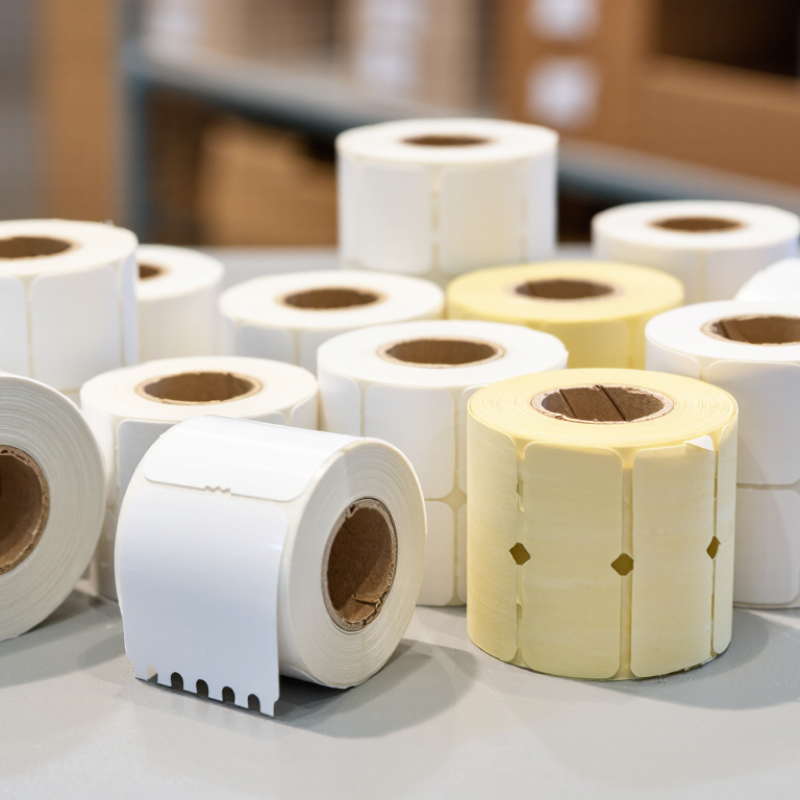
Understanding Price Gun Label Rolls and Their Uses
Price gun label rolls are continuous or pre-cut paper labels loaded into handheld pricing guns. A trigger advances each label, while the mechanism prints or applies a price. In shops, staff use them for shelf replenishment, markdowns, and quick price changes. A label needs enough space for a readable figure and, where required, a short product code. A cramped print can slow checkout checks. That matters.
Choosing a roll involves more than matching its width. Core size, adhesive strength, paper finish, and printer compatibility all affect daily use. Labels on chilled products may lift, while rough handling can smudge some prints. Test a sample roll on the actual packaging. It is a small step, but often overlooked.
Grand View Research valued the global labels market at about US$48 billion in 2023 and forecast 4.8% annual growth through 2030. This covers labels broadly, not price gun rolls alone, but it reflects the wider demand for product identification.
For buyers comparing suppliers in China, ask for roll dimensions, material details, and sample prints before placing a larger order. A low unit price can still mean waste if labels jam or peel.
How China’s Label Roll Supply Market Is Organized
China’s price-gun label-roll supply market is organized around converters, material suppliers, and export-focused traders. Converters turn paper and adhesive stock into rolls, then adjust core size, width, perforation, and label spacing for different guns. Traders often combine these specifications with cartons, barcode printing, or mixed-size orders. This structure gives buyers flexibility, but sample approval matters: a roll that looks correct may still feed poorly if its core or pitch is slightly off.
The wider market provides useful context. Smithers’ report, The Future of Label Printing to 2028, valued the global printed-label market at about US$49.9 billion in 2023 and projected growth through 2028. That figure covers many label types, not price-gun rolls alone. Still, it points to a large, diverse converting base. In China, suppliers may source similar facestock yet differ in coating consistency, roll winding, and batch control. Small details matter. Ask for a specification sheet, a physical sample, and confirmation of tolerances before placing a bulk order. I would not treat a low quote as proof of lower total cost.
Tips: Check core diameter, roll direction, label dimensions, adhesive performance, and labels per roll. Test the sample in the actual gun, then compare several rolls from the same batch.
China Top 10 Price Gun Label Rolls Suppliers? — How China’s Label Roll Supply Market Is Organized
A structural overview of common supply-chain stages. The chart shows process order, not supplier rankings, market shares, or sales figures.
Typical flow: material sourcing → label converting → printing and finishing → wholesale distribution → end-user purchasing. Actual routes vary by product and order.
Criteria for Evaluating Chinese Label Roll Suppliers
Choosing among Chinese price gun label roll suppliers takes more than comparing unit prices. Check roll width, core diameter, label length, and winding direction against your gun model. A small mismatch can cause jams at the counter. Ask for samples before placing a large order.
Material matters. Test whether the paper feeds smoothly and whether the adhesive holds on common packaging without leaving excessive residue. Print clarity should remain readable after handling. Request details on batch checks, defect handling, and packaging protection. Good answers are specific, not just reassuring. A sample may still differ from a later production run, so ask how consistency is monitored.
Communication is part of quality. Compare how clearly suppliers confirm specifications, sample timelines, minimum order quantities, and shipping estimates. Review product records and inspection reports where available, then verify that they match the offered rolls. Keep written specifications for reference. This can feel overly cautious, but vague terms often cause avoidable delays. Price matters, of course, though the cheapest quote may not include the same material or packing standard.
Profiles of Ten Chinese Price Gun Label Roll Suppliers
China’s price gun label roll market includes suppliers with different production strengths and service models. Supplier One focuses on standard one-line rolls for supermarkets and small retailers. Its catalog usually covers common widths, cores, and adhesive options. Supplier Two specializes in two-line formats, useful for displaying prices and dates together. Buyers should request a physical sample before confirming print accuracy.
Supplier Three offers blank rolls for flexible in-house coding. Supplier Four handles custom colors and pre-printed symbols, with clear artwork approval procedures. Supplier Five is known for short production runs, which may suit testing campaigns. Supplier Six supports larger orders with automated slitting and packing lines. Its output can be consistent, but buyers should still inspect roll tension and edge quality. Supplier Seven develops removable adhesive labels for temporary promotions. Performance may change on dusty or cold surfaces. Supplier Eight supplies thermal-compatible materials and provides basic storage guidance.
Supplier Nine combines label production with export documentation support. This can reduce communication delays for overseas buyers. Supplier Ten serves wholesalers with mixed-size cartons and repeat-order planning. Its flexibility is helpful, though minimum quantities may vary by material.
Experienced purchasers should compare sample adhesion, ink resistance, core dimensions, roll count, and delivery records. Ask for a current specification sheet and production photos. Certifications can support reliability, but they do not replace independent inspection. I would also review complaint handling, because a perfect sample does not guarantee every shipment. Some supplier profiles remain difficult to verify publicly. That is an issue worth acknowledging.
How to Compare Products, Pricing, and Supplier Services
China Top 10 Price Gun Label Rolls Suppliers: How to Compare Products, Pricing, and Supplier Services
When comparing Chinese suppliers, check more than roll price. Measure label width, length, core diameter, and winding direction against your price gun. A small mismatch can cause feeding problems. Label material also matters. Coated paper suits ordinary indoor shelves, while stronger adhesive helps on dusty cartons. Ask for samples before ordering. Test them in a busy store or warehouse, not only on a clean desk. Print clarity should remain sharp after handling. It should not fade easily.
Pricing needs a wider view. Compare the cost per thousand labels, not only the carton price. Include tooling, custom printing, packaging, shipping, and possible replacement waste. A lower quotation may hide a higher minimum order quantity. Request a detailed pro forma invoice with product specifications. Payment terms and lead time should be written clearly. I once focused too heavily on unit price and overlooked inconsistent roll counts. That mistake changed the real cost.
Supplier service can reveal production reliability. Ask how quality is checked during slitting, rewinding, and packing. Useful evidence includes inspection records, material details, and recent sample photos. Check response speed and whether technical questions receive precise answers. A capable supplier should explain tolerances, adhesive options, and storage conditions. Confirm replacement procedures for damaged or incorrect goods. Communication is part of quality.
Do not judge from polished catalogs alone. Compare samples, documents, delivery records, and realistic production capacity. Supplier rankings can guide research, but they cannot replace testing.