What is the Purpose of a Cooling Tower in Industrial Systems?
cooling towers play a vital role in industrial systems. They help manage heat in various processes. By absorbing heat from industrial equipment, cooling towers prevent overheating. This function is essential for the efficiency and longevity of machinery.
In many industries, cooling towers regulate temperature. Water circulates through equipment, absorbing heat. It then flows to the cooling tower, where it cools down. This process enhances operational efficiency. However, not all cooling towers perform equally well. Factors like design and maintenance affect their effectiveness.
Sometimes, cooling towers can face challenges. Excessive scaling or biological growth can hinder performance. These issues can lead to inefficiencies and increased costs. Reflecting on these potential drawbacks can improve system reliability. Understanding the purpose of a cooling tower is essential for industrial operations. It ensures productivity and sustainability in various applications.
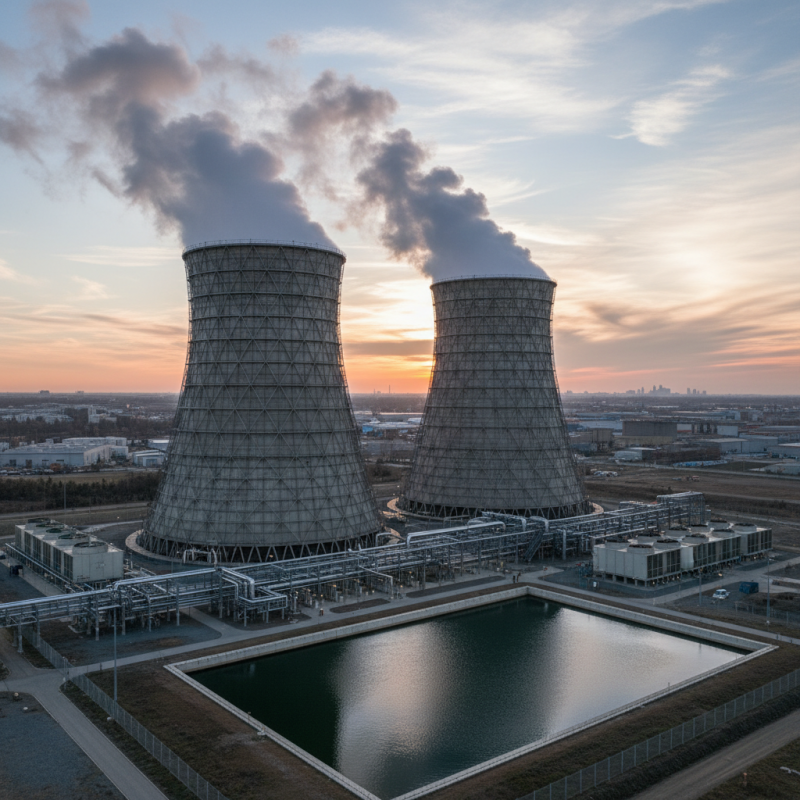
The Role of Cooling Towers in Industrial Processes and Their Importance
Cooling towers play a vital role in industrial processes by regulating temperatures. They help maintain optimal conditions for machinery and prevent overheating. In many industries, high temperatures can lead to equipment failure, impacting productivity and increasing maintenance costs.
One of the main functions of cooling towers is to dissipate excess heat from processes. Water is circulated through systems, absorbing heat, and then sent to the cooling tower. Here, the water cools off, often through evaporation. This method is efficient, yet it requires careful monitoring. Airflow and water quality can affect performance.
Furthermore, cooling towers contribute to energy efficiency. By reducing the heat load, they minimize energy consumption. However, improper operation can lead to increased energy use and environmental impact. Regular maintenance is crucial to ensure they function effectively. Neglect can cause problems like scale buildup or water contamination. Understanding these challenges is essential for optimal performance.
Types of Cooling Towers Used in Various Industries: A Comparative Overview
Cooling towers play a vital role in industrial systems. They help dissipate heat, maintaining optimal operating temperatures. Different types of cooling towers are used across industries, each designed for specific applications.
For example, open cooling towers are common in power plants. They utilize the evaporation of water to cool efficiently. Closed-circuit cooling towers, on the other hand, are found in chemical processing. These systems provide higher cooling efficiency and require less water. Hybrid towers combine both types, offering flexibility in various climates.
Tips: Regular maintenance is crucial. Check for obstructions and clean filters often. A small investment in upkeep can save significant energy costs. Consider monitoring water quality periodically to prevent scaling. This attention can enhance efficiency.
Counterintuitively, not all systems need large towers. Smaller operations might benefit from compact designs. Evaluate your specific needs. Avoid unnecessary expenses while ensuring effective cooling. Understanding your cooling requirements is key to optimal system performance.
What is the Purpose of a Cooling Tower in Industrial Systems? - Types of Cooling Towers Used in Various Industries: A Comparative Overview
| Type of Cooling Tower | Cooling Capacity (MW) | Application Industry | Efficiency (%) | Water Usage (m³/h) |
| Natural Draft | 5-50 | Power Generation | 80-90 | 20-200 |
| Forced Draft | 10-100 | Chemical Processing | 75-85 | 15-150 |
| Induced Draft | 20-200 | HVAC Systems | 85-95 | 25-300 |
| Evaporative | 5-150 | Food Processing | 80-88 | 10-100 |
| Crossflow | 30-120 | Manufacturing | 82-92 | 20-250 |
Key Components of Cooling Towers and Their Functions in Heat Dissipation
Cooling towers play a vital role in industrial systems, mainly for heat dissipation. The key components of cooling towers include the structure, fill, drift eliminators, and fans. The structure supports the entire system and ensures water flows correctly through the tower. The fill increases surface area, enhancing the heat exchange process.
According to the U.S. Department of Energy, cooling towers can reduce energy consumption by 15% in industrial plant operations. Drift eliminators prevent water droplets from escaping into the atmosphere, which can lead to water loss. Fans circulate air through the tower, helping to cool the water down before it reenters the system. These components work together to ensure efficient cooling, but inefficiencies can arise over time.
Regular maintenance is crucial. Debris buildup in the fill or malfunctioning fans can hinder performance. The effectiveness of cooling towers can decline by as much as 20% if neglected. Understanding these components fosters better management of cooling systems in industrial plants. Companies should focus on routine checks to avoid costly downtimes.
Efficiency Metrics: Measuring Cooling Tower Performance and Capacity
Cooling towers play a vital role in industrial systems. They regulate temperature by dissipating heat from the process. The design and operation affect their efficiency. To ensure effectiveness, it’s crucial to measure performance accurately. Efficiency metrics help operators understand how well a cooling tower functions under varying conditions.
One common metric is the cooling tower’s capacity. This measures its ability to remove heat from circulating water. Factors influencing this include airflow, water temperature, and humidity. Operators often overlook the impact of outside temperatures. This can create inefficiencies that need addressing. Performance can suffer if not regularly assessed.
Another important metric is approach temperature. This is the difference between the water temperature and the air’s wet bulb temperature. A smaller difference indicates better performance. However, many cooling towers struggle during peak loads. Adjustments may be necessary to maintain optimal efficiency. Regular monitoring and maintenance are essential to counter potential issues. Without this, inefficiencies can lead to increased operational costs.
Environmental Impact and Regulations for Industrial Cooling Towers
Cooling towers play a vital role in industrial systems by regulating temperature. They help dissipate heat generated during industrial processes. However, their environmental impact is significant and cannot be ignored.
One of the main concerns involves water consumption. Cooling towers often evaporate substantial amounts of water. This can lead to local water shortages, especially in arid regions. Additionally, the release of warm air can alter local climates. There's a delicate balance between operational needs and environmental sustainability.
Regulations have become stricter to mitigate these issues. Industries must comply with standards to reduce pollution and conserve water. Monitoring and reporting are now essential practices. Yet, many facilities struggle to meet these standards. This gap raises questions. How can companies improve their practices while maintaining efficiency? It’s a challenge that requires ongoing reflection and action.
 Innotex Group