Why Is Machine Vision Inspection Essential for Quality Control?
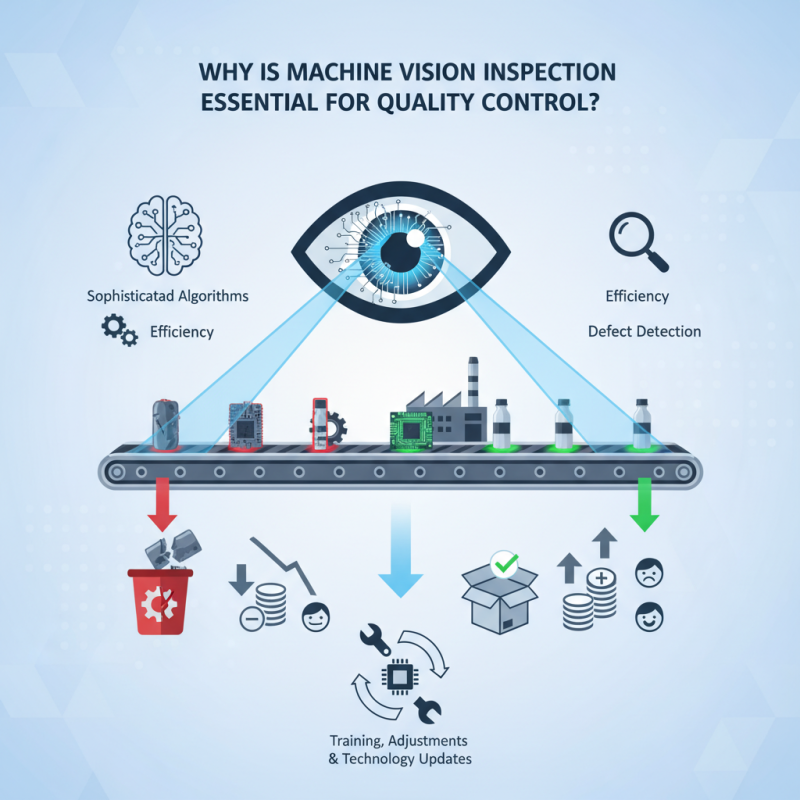
In today's fast-paced manufacturing landscape, Machine Vision Inspection is crucial for maintaining high-quality standards. According to Dr. Emily Chen, a leading expert in the field, "Machine Vision Inspection not only detects defects but enhances the entire production process." This technology employs sophisticated algorithms to identify minute flaws that are often invisible to the human eye.
Companies leveraging Machine Vision Inspection typically see a significant reduction in errors. This leads to lower costs and increased customer satisfaction. However, the integration of such systems is not without challenges. Organizations must continually assess the effectiveness of their vision systems. This raises important questions about training, adjustments, and technology updates.
There is no one-size-fits-all solution when implementing Machine Vision Inspection. Each production line may require unique adjustments to optimize performance. With the right approach, manufacturers can harness the power of Machine Vision Inspection to create superior products. Yet, it is essential to remain vigilant and agile in the face of emerging quality control needs.
The Role of Machine Vision in Enhancing Product Consistency and Quality
Machine vision inspection significantly improves product consistency and quality across various industries. According to a recent report by MarketsandMarkets, the machine vision market is projected to reach $13.3 billion by 2025, indicating a growing recognition of its importance in quality control. By utilizing advanced imaging technologies, manufacturers can detect defects early in the production process. This minimizes waste and reduces costs associated with rework.
The reliance on machine vision helps ensure that products meet stringent quality standards. In a 2022 study by the International Society of Automation, about 30% of inspection processes are still manual, which can lead to inconsistencies. Machines, on the other hand, can conduct inspections at high speeds and with high accuracy. However, imperfect systems still exist. Misalignment, sensor errors, and lighting conditions can affect inspection results. These issues require constant evaluation and adjustment to achieve optimal performance.
Incorporating machine vision into production enhances efficiency and reliability. For instance, industries like automotive and pharmaceuticals greatly benefit from automated inspections. Reports indicate that companies experience up to a 50% reduction in defects after implementation. Yet, it's crucial to acknowledge that not all implementations succeed. Continuous monitoring and periodic reassessment of the vision system are essential for maintaining quality standards.
Statistical Evidence of Defects Reduced Through Machine Vision Integration
Machine vision inspection has emerged as a critical component in quality control systems. Recent studies show that integrating machine vision technology can reduce defects by up to 50%. A report from an industry analysis group reveals that companies employing machine vision saw a 30% decrease in error rates across production lines. These improvements translate to significant cost savings and increased efficiency.
Defects can lead to substantial financial losses. For instance, manufacturers face an average cost of $3.33 million annually due to product defects. Yet, many still rely on manual inspections, which can be inconsistent. Too often, human errors result in overlooked flaws. In contrast, automated systems can inspect items at speeds exceeding 100 units per minute, ensuring consistent quality.
Despite the clear benefits, challenges remain. Some companies struggle with integration costs. There can also be a steep learning curve for staff. Operators may need training to optimize machine vision systems effectively. Transitioning to such technology is not without its pitfalls, but the potential for defect reduction makes it a worthy consideration. Data indicates that firms that invest time and resources into this transition ultimately outperform their competitors.
Why Is Machine Vision Inspection Essential for Quality Control? - Statistical Evidence of Defects Reduced Through Machine Vision Integration
| Inspection Method | Defect Rate (%) | Production Volume (Units) | Defects Detected | Cost of Quality Control ($) |
| Manual Inspection | 5.0% | 10,000 | 500 | 15,000 |
| Machine Vision | 1.2% | 10,000 | 120 | 10,000 |
| Automated Inspection with AI | 0.5% | 10,000 | 50 | 12,000 |
Cost-Benefit Analysis of Implementing Machine Vision in Manufacturing
Implementing machine vision in manufacturing can lead to significant cost savings. A report by a leading industry analyst indicates that machine vision systems can improve defect detection rates by up to 90%. This reduction in defects translates into less waste and lower operational costs. When manufacturers invest in machine vision, they often see returns that can exceed 30% within the first year.
However, the initial investment in machine vision technology can be daunting. The costs include hardware, software, and training. Research shows that companies may spend between $50,000 and $150,000 on a typical system. Many firms hesitate, fearing the technology may not deliver the promised improvements. Surprisingly, a substantial number still rely on manual inspections, which can result in missed defects and costly recalls.
The benefits of machine vision aren't just about defect detection. These systems offer valuable data analytics that can inform process improvements. By identifying trends and anomalies, manufacturers can drive further efficiency. Yet, many businesses struggle to adapt to these new insights. This hesitation differs from companies that have embraced data-driven solutions. They experience a more agile production process, benefiting from continuous improvement.
Cost-Benefit Analysis of Implementing Machine Vision in Manufacturing
This chart illustrates the cost-benefit analysis of implementing machine vision inspection in manufacturing. It highlights the initial investment, annual savings from reduced errors, and improvements in productivity. The data reflects the potential financial advantages that can be gained through enhanced quality control practices.
Comparison of Traditional Inspection Methods and Machine Vision Technologies
Traditional inspection methods often involve manual processes. These methods can be slow and prone to human error. Studies indicate that human inspectors may miss up to 20% of defects in their assessments. This can compromise product quality and increase costs in the long run.
In contrast, machine vision technology provides a more consistent approach to quality control. It uses cameras and artificial intelligence to analyze products in real-time. Reports suggest that machine vision systems can enhance defect detection rates by over 90%. This level of accuracy significantly reduces waste and improves production efficiency. However, implementing these technologies may require substantial upfront investment.
Despite the advantages, machine vision is not without its challenges. Systems must be calibrated correctly to avoid false positives. Additionally, complex products may still pose difficulties. Companies must consider these factors when transitioning from traditional methods. Balancing human oversight with automated inspection could prove essential.
Future Trends in Machine Vision and Their Impact on Quality Control Practices
The future of machine vision in quality control shows exciting potential. As technology advances, we see more integration of artificial intelligence. AI can analyze images faster and more accurately than humans. This leads to quicker decision-making processes. When products are scanned, AI can identify defects immediately. However, this technology is not infallible. Some errors may still occur, requiring human oversight to ensure accuracy.
New developments are emerging in 3D vision systems. These systems help in detecting flaws in complex shapes. With precise measurements, they enhance quality assurance. Enhanced lighting techniques improve visualization in challenging environments. Yet, lighting can create shadows that obscure defects. This means continuous refinement is necessary for optimal performance.
As automation increases, the workforce will need reskilling. Operators must learn to work alongside machines, understanding both systems. While machine vision improves efficiency, it also presents challenges. Integrating new technologies requires critical evaluation and adaptation. Embracing these changes will ultimately shape the future of quality control practices.
 Innotex Group