How to Choose the Right Plastic Box for Your Needs?
Choosing the right Plastic box can significantly impact your storage solutions. With many options available, it's essential to consider various factors. Plastic boxes offer versatility for different needs, from organizing small items to larger storage solutions.
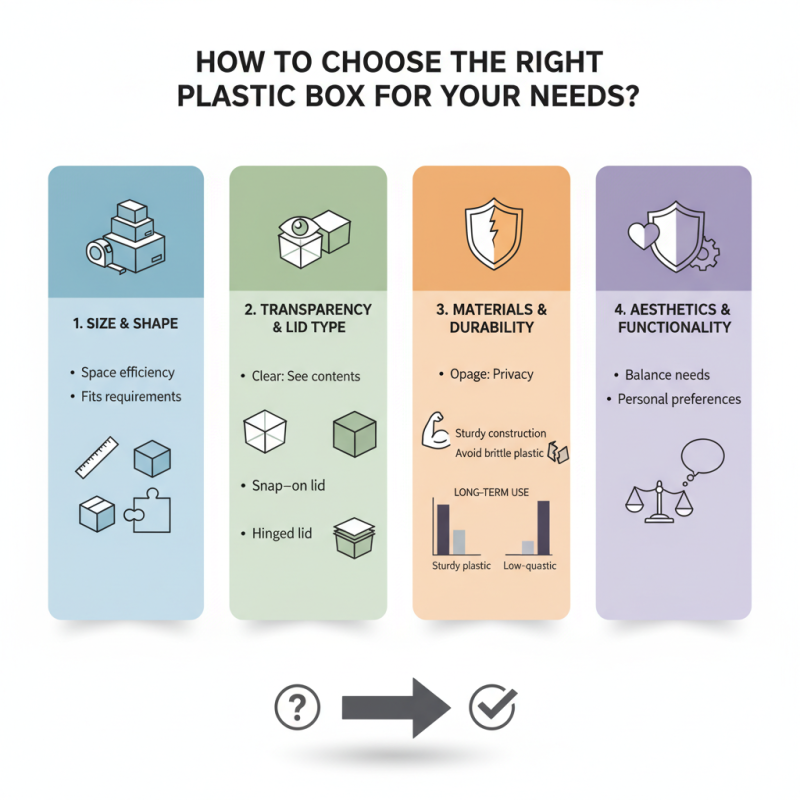
A well-chosen plastic box enhances space efficiency. You must consider the size and shape that fit your requirements best. For instance, clear boxes enable you to see contents easily. However, opaque boxes can provide better privacy. Think about the lid type, as some boxes come with snap-on lids while others have hinged options.
It's easy to overlook materials and durability. Not all plastic boxes are created equal. Low-quality plastic can crack or become brittle over time. Always check for sturdy construction to ensure longevity. Balancing aesthetics and functionality is vital but often challenging. Reflect on your personal needs and preferences before making a selection.
Understanding Different Types of Plastic Boxes and Their Applications
When considering plastic boxes, various types serve different needs. Storage bins are popular for their size and versatility. They come in various dimensions, making them suitable for organizing toys, tools, or kitchen supplies. Generally, these boxes have sturdy lids that keep items safe from dust and moisture.
Another option is the stackable plastic box. These boxes maximize space with a design that allows them to be nested. This is an excellent choice for those with limited storage areas. Additionally, airtight plastic boxes protect food items efficiently, preventing spoilage. They help keep your pantry organized and ingredients fresh for longer periods.
Not all plastic boxes are the same. It's essential to consider material quality and strength. Thin plastic may crack easily, failing to protect your belongings. Look for boxes with thicker walls if you need durability. Some manufacturers might cut corners, so researching reviews can help identify reliable options. Make sure to note the weight capacity, as this will influence how much you can store without damaging the box.
Types of Plastic Boxes and Their Applications
Evaluating Material Properties: Selecting the Right Plastic for Your Box
When selecting a plastic box, evaluating material properties is essential. Different plastics have unique characteristics that affect their performance. For instance, polycarbonate is known for its high impact resistance, making it suitable for heavy-duty applications. Meanwhile, polypropylene is lightweight and resistant to chemical solvents, ideal for storage and transport. According to a 2022 report from the Plastics Industry Association, over 70% of consumers prioritize durability and chemical resistance when choosing plastic containers.
Understanding the specific needs of your intended use will guide your choice of material. If high heat tolerance is required, polyethylene may be suitable due to its melting point of around 120ºC. However, it may not be ideal for situations with potential exposure to UV light, as this can degrade the material over time. The American Chemistry Council emphasizes the importance of considering environmental factors; neglecting them can lead to premature failures.
Tips: Always conduct a stress test on the material before finalizing your decision. Check for flexibility, strength, and resistance to wear. Consider the box's intended weight load and the external conditions it will face. This approach will enhance your confidence in the selection process and ensure longevity.
Determining Size and Capacity Needs for Effective Storage Solutions
Choosing the right plastic box is essential. Start by evaluating your size and capacity needs. Measure the space where you plan to store the box. A box that’s too big can clutter the area. A box that’s too small may not hold everything efficiently.
Consider what you will store. If you have bulky items, choose a larger box. For smaller, delicate items, a compact size works better. Make a rough list of these items. This can help you visualize your storage needs more clearly.
It's important to reflect on your habits, too. Are you prone to buying more items? If so, opt for a more spacious box. If you often simplify, a smaller box might suffice. The right choice balances your current needs with potential future requirements. This ensures effective storage solutions for everyone.
Considerations for Environmentally-Friendly Plastic Box Options
Choosing the right plastic box goes beyond dimensions and design. Environmentally-friendly options are becoming essential. Many consumers are now seeking sustainable materials. Biodegradable plastics are a great alternative. They break down faster, reducing landfill waste.
When selecting a plastic box, consider the material's environmental impact. Look for those marked with recycling codes. Some types of plastic are easier to recycle than others. Selecting recyclable materials helps reduce pollution.
Tips: Check for certifications that indicate eco-friendliness. This could include labels for recycled content or biodegradable materials. Also, think about the box's longevity. Durable products that last longer are more eco-friendly in the long run. Consider your usage. If the box will be used often, investing in a high-quality, sustainable option is wise.
How to Choose the Right Plastic Box for Your Needs? - Considerations for Environmentally-Friendly Plastic Box Options
| Box Material | Eco-Friendly Option | Weight Capacity (lbs) | Size (inches) | Usage Scenarios |
| Recycled Plastic | Yes | 50 | 12 x 10 x 8 | Storage, Moving |
| Biodegradable Plastic | Yes | 30 | 10 x 8 x 6 | Food Packaging, Gardening |
| PP Plastic (Polypropylene) | No | 40 | 14 x 10 x 4 | General Storage |
| PC Plastic (Polycarbonate) | No | 70 | 16 x 12 x 10 | Heavy Duty Storage |
| PLA Plastic (Polylactic Acid) | Yes | 25 | 9 x 7 x 5 | Single Use Items |
Assessing Cost-Effectiveness and Durability in Plastic Box Selection
When selecting a plastic box, cost-effectiveness and durability are crucial factors. Research shows that the average lifespan of high-quality plastic storage solutions is between 10 to 30 years. This lifespan greatly impacts long-term costs. A cheaper plastic option might save money upfront. However, it may need to be replaced more frequently. Weighing these aspects is essential for informed decision-making.
Tips: Look for reinforced corners and sturdy hinges. These features often indicate better durability. Pay attention to the thickness of the plastic. Thicker materials usually withstand wear and tear more effectively.
It's important to consider usage scenarios. If you're storing items outdoors, UV resistance matters. Conversely, if moisture is a factor, choose water-resistant options. Studies indicate that 25% of consumers overlook environmental conditions when selecting storage solutions. This oversight can lead to premature box failure.
Tips: Conduct a stress test on the box before purchase. Check how it holds up under pressure and weight. Understanding the potential limitations of a plastic box can lead to better investment choices. Evaluate reviews and user experiences for additional insights.
 Innotex Group