How to Choose ODM Baffle Bag FIBC Suppliers?

Choosing a reliable Odm Baffle Bag Fibc supplier requires more than comparing prices or reviewing attractive product photos. The right decision begins with the material, filling method, discharge design, and transport conditions. A supplier should understand whether the bag will carry powder, granules, minerals, chemicals, or food-grade products. Each application creates different demands.

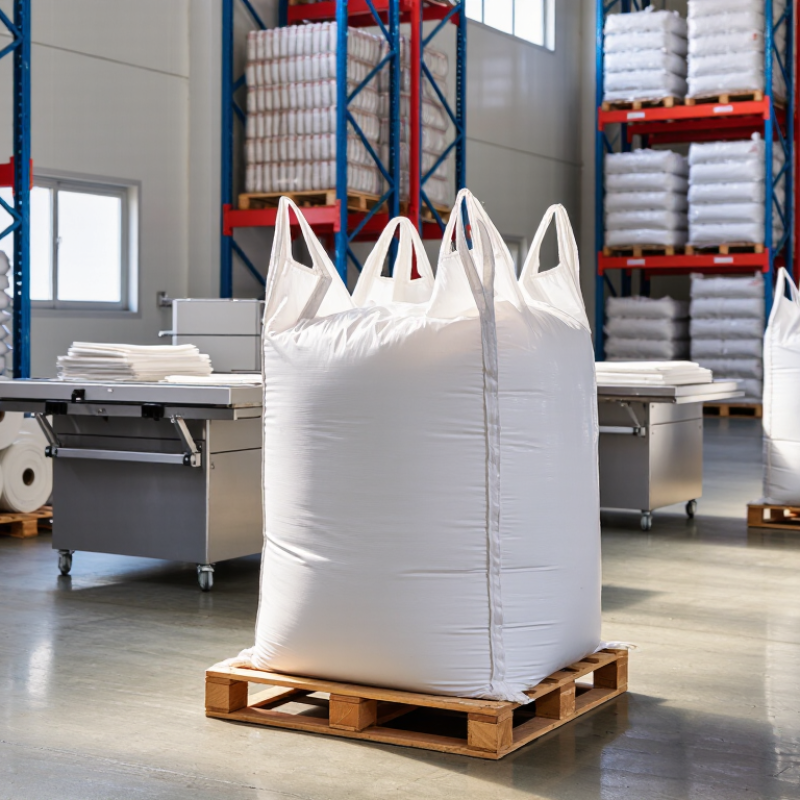
Dr. Susan Selke, a respected packaging materials expert, offers a useful reminder: “Packaging should be judged by performance, not appearance.” This principle matters when evaluating an Odm Baffle Bag Fibc manufacturer. A well-made bag should hold its shape during filling, stacking, storage, and movement. Its baffle panels should reduce bulging without restricting product flow. Seams must look even, tight, and professionally finished.

Practical experience also matters. Ask for fabric specifications, safe working load, safety factor, dimensions, lifting-loop design, and test records. Request a physical sample before approving large production. Check whether the supplier can provide batch traceability and consistent inspection reports. A factory visit can reveal more than a polished website. Look closely at cutting tables, stitching lines, warehouse cleanliness, and packaging methods.

A low quotation may hide weaker fabric or limited quality control. That does not always mean the cheapest supplier is unsuitable. However, the difference deserves careful investigation. Small errors can become expensive when bags leak, deform, or fail during handling. Supplier communication should also be tested. Slow answers today may create serious delays later. Reliable selection depends on evidence, technical questions, and honest comparison—not promises alone.

How to Choose ODM Baffle Bag FIBC Suppliers?

Understanding ODM Baffle Bag FIBC Suppliers and Their Capabilities

Choosing an ODM baffle bag FIBC supplier starts with capability, not a low quotation. ODM means the supplier develops structure, materials, stitching, testing, and documentation for your application. Grand View Research estimated the global FIBC market at about USD 5.2 billion in 2023, showing the sector’s scale. Yet market size does not prove technical competence. Ask for evidence from comparable loads, especially powders that bridge or shift during transport. A reliable supplier should explain baffle geometry, fabric strength, liner fit, discharge design, and safe working load.

Review the supplier’s engineering process carefully. Can it turn a product brief into drawings, prototypes, drop tests, and controlled revisions? ISO 21898 provides a useful reference for flexible intermediate bulk container performance and handling.

Request batch-level test reports, traceability records, and clear inspection criteria. Check how the factory controls needle damage, seam consistency, ultraviolet resistance, and electrostatic requirements.

A sample may look excellent and still fail under repeated handling. This is where many buyers underestimate production risk.

Tips: Request one pilot batch before full production. Compare filled-bag dimensions, pallet stability, discharge speed, and seam appearance. Ask who approves design changes. Confirm whether testing uses your actual material and filling conditions. No supplier is perfect. Rushed reviews still happen, so keep drawings, test results, and acceptance limits in writing.

Defining Your Product Requirements and Packaging Specifications

How to Choose ODM Baffle Bag FIBC Suppliers?

Defining Your Product Requirements and Packaging Specifications

Choosing an ODM baffle bag FIBC supplier starts with a precise product brief. Define the material, bulk density, filling method, discharge method, and required capacity. Record the target dimensions, safe working load, safety factor, and lifting loop design. These details prevent a bag from looking suitable but performing poorly in storage.

From packaging trials, I have found that baffle spacing matters more than many buyers expect. Properly placed baffles help the bag keep a stable shape on pallets. Specify the fabric type, coating, liner, sift resistance, seams, and printing needs. If moisture is a concern, describe the storage environment clearly. “Outdoor use” is too vague. Mention rain exposure, stacking time, and temperature changes.

Tips: Request a technical drawing and a pre-production sample. Check every measurement, seam, loop, and discharge spout. Ask for fabric test reports, load-testing records, and inspection procedures. Confirm whether the supplier can maintain consistent dimensions across repeated orders.

Do not choose from price alone. A cheaper bag may require extra pallets or create handling problems. I have also seen specifications become too complicated, increasing production errors. Remove features that do not support loading, transport, or unloading. Then review the final specification with your warehouse and quality teams.

How to Choose ODM Baffle Bag FIBC Suppliers? - Defining Your Product Requirements and Packaging Specifications

Requirement Dimension Recommended Specification Range Information to Define Before Sourcing Supplier Evaluation Criteria Typical Verification Method
Bag Size and Capacity Common body dimensions include approximately 85 × 85 × 90 cm to 95 × 95 × 120 cm; working volume is often about 0.6–1.1 m³. Required filled dimensions, target volume, pallet footprint, warehouse clearance, and transportation restrictions. Ability to produce repeatable dimensions, maintain low tolerance, and adapt the pattern without reducing strength. Dimensional inspection of first samples and production batches using calibrated measuring tools.
Safe Working Load (SWL) Typical FIBC ratings range from 500 kg to 2,000 kg, depending on construction, material, and safety factor. Maximum gross weight per bag, filling and discharge conditions, lifting method, and required safety factor. Documented design calculations, suitable fabric weight, reliable seams, and batch-level load testing. Top-lift or cyclic-load testing according to the applicable FIBC standard and purchase specification.
Safety Factor Common designs use a 5:1 safety factor for many single-trip applications and a 6:1 factor for reusable applications, subject to the intended use and governing standard. Whether the bag is single-trip or reusable, expected handling cycles, storage duration, and regulatory requirements. Correct safety-factor selection, traceable test records, and clear labeling of reuse limitations. Review of test certificates, construction drawings, and independent or witnessed load tests.
Baffle Construction Cross-shaped internal baffles are commonly positioned on four sides to limit bulging and improve form stability. Desired filled shape, baffle opening percentage, product flow requirements, and stacking arrangement. Accurate baffle placement, secure attachment, unobstructed filling and discharge, and consistent finished geometry. Visual inspection, internal measurement, filled-bag shape assessment, and stacking trial.
Fabric and Lamination Woven polypropylene is standard; laminated fabric is selected when improved moisture or fine-powder containment is required. Fabric weight, coating type, permeability, UV exposure, antistatic needs, and contact with the contents. Stable raw-material quality, controlled coating thickness, low variation in tensile strength, and suitable cleanliness controls. Fabric weight measurement, tensile testing, air-permeability testing, and coating inspection.
Filling Inlet Common options include a standard top spout, wide-mouth inlet, or full-open top, selected according to filling equipment. Inlet diameter, inlet length, closure method, filling speed, dust-control needs, and equipment interface. Accurate dimensions, secure closures, compatibility with automated filling lines, and dust-minimizing design. Fit test with the filling nozzle, closure inspection, and filled-bag leakage assessment.
Discharge Outlet Typical discharge spout diameters are approximately 25–50 cm, depending on product flow and receiving equipment. Outlet diameter, outlet length, closure type, liner connection, and required discharge rate. Smooth discharge, reliable ties or closures, accurate placement, and no interference from internal baffles. Timed discharge trial using the actual or representative product and receiving equipment.
Liner Requirement Polyethylene liners are commonly used for fine powders, hygroscopic materials, or applications requiring additional product containment. Liner thickness, film type, dimensions, attachment method, antistatic requirements, and food-contact status where applicable. Correct liner fit, clean sealing, compatibility with the contents, and secure integration with the inlet and outlet. Film thickness measurement, seal-strength test, leak test, and fit check inside the outer bag.
Electrostatic Control Type A, B, C, and D FIBC configurations address different electrostatic risks; Type C bags require grounding during filling and discharge. Material ignition sensitivity, operating environment, grounding procedures, flammable atmosphere classification, and handling equipment. Correct electrostatic design, clear grounding instructions, controlled conductive components, and relevant testing capability. Surface-resistance, continuity, breakdown, and electrostatic-performance tests conducted to the selected standard.
Product Compatibility Dry powders, granules, flakes, and some agricultural or industrial materials can be packed in FIBC when the construction is properly selected. Particle size, bulk density, moisture sensitivity, flowability, temperature, abrasiveness, and chemical characteristics. Ability to recommend appropriate fabric, liner, coating, discharge design, and cleanliness level for the material. Material compatibility review, trial filling, flow test, leakage test, and storage simulation.
Seam and Stitching Quality Critical seams should use consistent stitch density, suitable thread, reinforced stress points, and clean seam finishing. Seam type, stitch pattern, thread material, reinforcement requirements, and acceptable visual defects. Controlled sewing parameters, operator inspection, low defect rates, and traceable corrective-action procedures. Seam-strength testing, visual inspection, pull testing at lifting-loop attachments, and sample audits.
Lifting Loops Four-loop construction is widely used; loop length and spacing must match the lifting frame or forklift attachment. Lifting equipment, loop length, loop color coding, cross-corner or corner-loop design, and handling limitations. Uniform loop height, reinforced attachment, correct load distribution, and compatibility with handling equipment. Loop tensile test, filled-bag lifting trial, and inspection of attachment seams.
Cleanliness and Regulatory Use Industrial, food-contact, pharmaceutical, and hazardous-material applications require different cleanliness and compliance controls. Intended market, product-contact status, prohibited substances, hygiene level, documentation, and labeling requirements. Defined cleaning procedures, controlled production areas where required, material declarations, and complete compliance documentation. Visual cleanliness check, odor inspection, certificate review, migration testing, or laboratory analysis when required.
Printing and Identification Printing may include handling symbols, batch fields, product information, hazard markings, and recycling instructions. Artwork dimensions, print colors, variable data, barcode requirements, legal markings, and print durability. Accurate artwork reproduction, legible variable information, ink adhesion, and controlled print registration. Artwork proof approval, barcode scan test, rub test, and print-position inspection.
ODM Development Capability A complete ODM process normally includes requirement review, technical drawing, prototype sampling, testing, revision, and production approval. Expected development schedule, prototype quantity, approval milestones, intellectual-property ownership, and change-control process. Engineering support, clear specifications, sample traceability, documented revisions, and production consistency after approval. Review of drawings, sample reports, pilot-run results, inspection plans, and approved golden samples.
Quality and Delivery Control The purchase specification should define inspection levels, sampling frequency, packaging method, delivery tolerance, and corrective-action timing. Forecast volume, minimum order quantity, target lead time, shipment method, batch traceability, and acceptance criteria. Stable capacity, documented quality system, reliable lead-time performance, and transparent nonconformance handling. Pre-shipment inspection, production record review, lot sampling, delivery-performance tracking, and corrective-action verification.
Selection Priority: Confirm product compatibility, safe working load, safety factor, electrostatic requirements, filling and discharge interfaces, and applicable regulations before comparing price or lead time.

Evaluating Supplier Quality, Materials, and Manufacturing Standards

Choosing an ODM baffle bag FIBC supplier requires more than comparing unit prices. Quality begins with documented control at each production stage. Ask for fabric specifications, thread details, coating thickness, and tested safe working load. Experienced suppliers should explain how baffles maintain shape during filling, stacking, and transport. Request recent test reports, not generic certificates. Inspect sample seams, lifting loops, discharge spouts, and dust-proof closures. A bag can look strong and still fail at its stitching.

Material selection must match the load, environment, and handling cycle. Woven polypropylene may need UV stabilization, an inner liner, or antistatic control for certain applications. Do not accept vague claims such as “premium grade.” Confirm resin traceability, recycled content, and whether additives affect strength. Manufacturing standards deserve equal attention. Review incoming-material checks, loom settings, sewing inspections, cleanliness controls, and final dimensional checks. Ask how nonconforming bags are isolated. One overlooked batch can create expensive delays. I would also examine production samples from different dates, because one perfect sample proves very little.

Tips: Compare at least three samples. Measure fabric weight and loop width yourself. Visit the factory, if possible, and observe sewing in real time. Check calibration records for testing equipment. Ask for a written inspection plan and corrective-action history. Be cautious when answers arrive quickly but lack evidence. Supplier quality is demonstrated repeatedly, not promised once. Even experienced teams can miss small inconsistencies, so independent verification remains worthwhile.

How to Choose ODM Baffle Bag FIBC Suppliers?

Illustrative buyer-defined scoring framework for evaluating supplier quality, materials, and manufacturing standards. The weights total 100% and should be adjusted to the application, required SWL, regulatory needs, and risk level.

Prioritize documented quality controls, verified polypropylene materials, controlled sewing and baffle construction, product testing, traceability, and ODM engineering support. Ask suppliers to provide objective evidence such as inspection records, test reports, material certificates, production samples, and corrective-action procedures.

Comparing Customization, Pricing, Minimum Orders, and Lead Times

How to Choose ODM Baffle Bag FIBC Suppliers?

Choosing an ODM baffle bag FIBC supplier requires more than comparing one quotation. Start with customization. Ask whether the supplier can adjust fabric weight, baffle dimensions, filling inlet, discharge outlet, coating, and printing. Request a technical drawing and sample bag before approving production. In real purchasing work, small changes in corner construction can affect stacking stability and warehouse space. A supplier with documented testing, traceable materials, and experienced engineers is easier to trust. Still, samples can look better than mass production. Check how quality is controlled between batches.

Tips: Build a comparison sheet with five columns: specifications, unit price, minimum order, lead time, and inspection method. Ask what the price excludes, such as tooling, testing, special fabric, or export packing. Confirm whether lead time starts after deposit, artwork approval, or sample confirmation. That detail matters.

Minimum orders often influence the real cost more than the advertised price. A low unit price may require thousands of bags, creating slow-moving inventory. For a trial order, negotiate a smaller MOQ, but expect a higher price. Compare production lead time with your delivery schedule, including sampling and inspection days. Reliable suppliers provide realistic dates and update buyers when materials change. I would also request references from similar applications, not only glossy certificates. Experience helps, but it is not proof by itself. A cheaper offer can become expensive.

Verifying Compliance, Samples, Communication, and Long-Term Support

How to Choose ODM Baffle Bag FIBC Suppliers?

Verifying compliance should start before price discussions. ISO 21898 covers many requirements for flexible intermediate bulk containers, including construction and performance testing. Ask for current test reports, material specifications, and batch traceability. The 2023 FIBC market analysis by Grand View Research estimates continued global growth through 2030, increasing supplier competition and quality differences. Bigger output does not guarantee better bags. Check the details.

Request samples made with your intended fabric, liner, baffle design, and filling method. Inspect corner seams, lifting loops, discharge spouts, and printed markings. Ask the supplier to explain safe working load, safety factor, moisture resistance, and stacking limits. Independent laboratory testing adds credibility, especially for food, pharmaceutical, or hazardous-material applications. Requirements vary by destination. Confirm them with a qualified compliance professional. A beautiful sample may still conceal uneven stitching.

Tips: Use a written sample checklist. Record fabric weight, dimensions, seam strength, and tolerance. Test samples under realistic loading conditions. Communication also matters. Can the supplier answer technical questions clearly? Do they report delays early? Discuss tooling ownership, inspection frequency, corrective actions, spare production capacity, and after-sales response times. The 2024 Smithers flexible-packaging outlook highlights efficiency, material reduction, and supply-chain resilience as major industry pressures. Therefore, long-term support should include design reviews and improvement records. Be cautious with promises. Vague answers deserve a second inspection.