How to Choose the Best Wine Box for Your Business?

A wine box is more than a container. It protects a bottle, carries your brand, and shapes the moment a customer opens an order. The Wine Box you select should match the way your business sells, stores, and ships wine. A gift shop may need a refined finish, while a busy online retailer may prioritize sturdy corners and efficient packing. The right choice depends on real use.

Start by checking bottle size, weight, and fit. A box that allows movement can leave labels scuffed or glass vulnerable during handling. Look at inserts, closure strength, and how easily staff can assemble each package. Before ordering in bulk, test a sample with the actual bottle and packing materials. A quick handling check can reveal gaps that a catalog photo cannot. Then compare materials, print quality, minimum order quantities, and total cost—not just the price per unit. A matte surface can feel premium under soft store lighting, but fingerprints may show. Small details matter.

Branding matters too. Color, typography, and a clear message can make packaging memorable without crowding the design. Consider storage space and whether materials suit your sustainability goals; ask suppliers for specific material details rather than relying on broad claims. There is no perfect box. A beautiful option may be costly, and a practical one may feel plain. That trade-off deserves a second look. This guide explores the features and questions that help businesses choose packaging with confidence.
How to Choose the Best Wine Box for Your Business?

Identify Your Business Needs and Target Customers

Before choosing a wine box, define what your business needs it to do. A shop selling single bottles may need a compact box with a secure insert. A delivery service may need stronger corners and space to reduce bottle movement. Measure your most common bottle shapes, not just the standard one. They can vary more than expected. Also consider storage space, packing speed, and the cost of damaged orders. A beautiful box is less useful if staff struggle to assemble it during a busy shift.

Think about who will receive the box. Gift buyers often value a clean finish, a note card, and easy carrying. Repeat customers may care more about protection and simple disposal. Ask a few customers what they notice, then compare their answers with your own observations. Small tests help. Pack a sample, carry it, and check whether the bottle shifts or the handle strains. I would not assume that a premium look always means a better customer experience. Sometimes the insert feels stiff, or the opening is awkward. That is worth fixing before ordering a large quantity. Keep the box aligned with your price point and sales channel, while leaving room for seasonal changes in demand.

Compare Wine Box Types, Materials, and Capacity

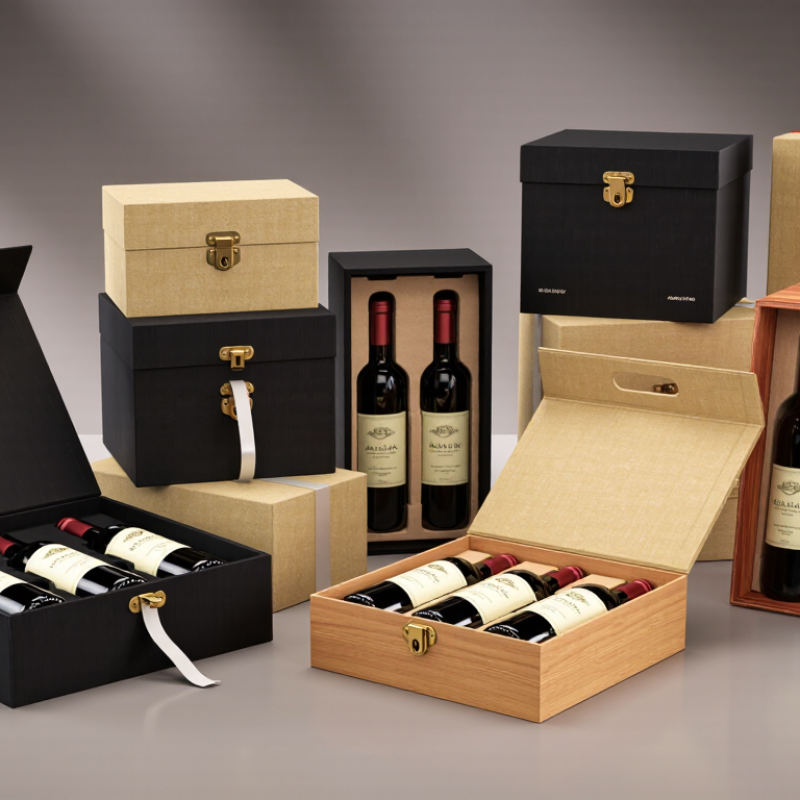
A wine box should match its route, bottle shape, and sales setting. Corrugated cardboard suits parcel shipping because fluted layers cushion glass and stack efficiently. Rigid paperboard creates a polished gift presentation, but offers less impact protection without a fitted insert. Wooden boxes feel substantial, yet add weight and storage space. Molded-pulp inserts can separate bottles without plastic, though they need a snug fit to prevent movement.

Capacity changes the design. Single-bottle boxes work well for premium gifts; two- and three-bottle formats need dividers to stop clinking. Six-bottle cases are efficient for cellar orders, but a loaded case can be awkward to lift. Check bottle height, diameter, closure clearance, and total weight before ordering. Fit matters. I would test a packed sample over a short drop and stacking trial; a neat empty box can behave differently when full.

Market conditions also matter. The International Organisation of Vine and Wine’s 2023 sector report estimated global wine consumption at 221 million hectolitres, down 2.6% from 2022. That shift argues for flexible packaging quantities, rather than excess custom stock. For material decisions, Eurostat reported that the EU recycled 65.4% of packaging waste in 2022. This is an overall rate, not a promise that every local facility accepts every box component. Keep inserts and outer packaging easy to separate, and verify recycling guidance for your sales region. A small label panel is easy to overlook. Include handling details where buyers can actually see them.

Assess Bottle Protection, Shipping, and Storage Requirements

How to Choose the Best Wine Box for Your Business?

Assess Bottle Protection, Shipping, and Storage Requirements

A good wine box begins with the bottle, not the carton. Measure each bottle’s height and widest point, including any unusual shoulder or closure. Dividers should keep glass from touching glass and stop bottles sliding when the box is tilted. The neck needs support, but excessive pressure can cause scuffs or make packing slow. Not too tight. A small sample pack can reveal fit problems before a full order.

Shipping adds different stresses: stacking, vibration, and rough handling. Choose a carton with suitable strength for the packed weight, and check your carrier’s current size and handling requirements. Pack one sample using your real bottles and packing routine. Move it from the packing bench to the dispatch area, then inspect for movement, crushed corners, or rubbed labels. Test one. If bottles shift, adjust the divider or cushioning before increasing carton size; extra space alone may worsen movement.

Storage conditions matter as well. Keep empty boxes dry, away from direct sunlight, and stacked square rather than leaning. Measure shelf depth and aisle clearance, especially if cartons are stored near picking stations. A compact design saves space, though it may be harder to assemble quickly during busy periods. That trade-off is easy to miss. Record the box dimensions, bottle fit, and trial results, then revisit them when bottle shapes or shipping routines change.

Evaluate Branding Options and Regulatory Considerations

A wine box should make your business recognizable before the bottle is opened. Choose colors, typography, and imagery that match your audience, then test them on the actual box. A small logo may disappear against textured paper. Foil can look elegant, but it may raise costs and complicate recycling. Keep essential details readable.

Practical details matter, too. Measure the bottle, neck, and closure, then check that the insert prevents movement during handling. A snug fit protects the product and creates a more considered unboxing experience. Test a sample under ordinary storage conditions. Small flaws show up quickly.

Check regulatory requirements in every market where the wine will be sold. Rules may affect labeling, required statements, package materials, and how product information appears. Requirements vary, so confirm them with relevant authorities or qualified compliance professionals before printing a large run. Avoid unsupported claims such as “fully recyclable” unless you can substantiate them. A polished mockup can still miss a compliance detail; that is easy to overlook. Leave room for approved information, and review the final artwork at full size.

Compare Suppliers, Costs, and Sustainability Credentials

Choosing a wine box starts with how it will travel and appear on the shelf. Ask each supplier about board strength, print options, minimum order quantities, and production lead times. Request a physical sample. Check how the lid closes, whether bottles shift, and how the box feels when lifted. Small details matter. A supplier’s polished catalogue does not prove consistent quality, so compare samples from more than one source.

Compare the full delivered cost, not just the quoted unit price. Include setup fees, freight, storage, and the cost of damaged packaging. A lighter box may reduce shipping expenses, but it still needs to protect the bottle during handling. Ask suppliers to explain price breaks at different order volumes. Then test a realistic quantity before committing to a large run. Forecasts can be wrong.

Sustainability claims deserve careful checking. Ask what percentage of the material is recycled, whether the packaging can be recycled locally, and what documentation supports those statements. Look for clear material specifications rather than broad phrases such as “eco-friendly.” Claims need context. A sturdy box may use more material, yet prevent product damage and avoid replacement shipments. That trade-off is worth measuring, not assuming. Compare suppliers using the same questions and keep their written answers for later review.