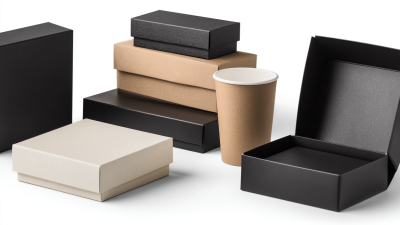
7 Best Custom Packaging Suppliers for Global Buyers?
Custom Packaging has become a practical buying decision, not just a branding exercise. A box must protect its contents, fit shipping workflows, and represent the product clearly. Smithers’ report, The Future of Global Packaging to 2028, forecasts a global packaging market worth about $1.2 trillion by 2028. That growth gives buyers more options, but it can also make supplier comparisons harder.
The sustainability question deserves equal attention. The OECD’s Global Plastics Outlook (2022) reports that packaging accounts for about 40% of plastic waste. This figure concerns plastic waste, not all packaging waste, and that distinction matters. Buyers can ask suppliers about material composition, recycled content, and practical end-of-life guidance. Claims still need checking.
A polished catalogue is not proof of reliable production. Details matter. For global orders, compare sample quality, minimum order quantities, lead times, print consistency, and export experience. Ask how suppliers handle changes between an approved sample and a full production run. Request written specifications, not just reassuring emails. A low quote may leave out tooling, freight, or quality checks. I have also seen buyers focus heavily on appearance and overlook carton strength; it is an easy mistake. No supplier fits every business. The seven companies in this guide are starting points for comparing capabilities, asking sharper questions, and finding a partner whose promises hold up under real orders.

What Custom Packaging Suppliers Offer to Global Buyers
Custom packaging suppliers do more than print a logo on a box. They help global buyers choose materials, test dimensions, create dielines, and prepare production-ready artwork. A capable supplier can also provide samples, quality checks, and shipping documents, making it easier to compare orders across factories and markets. Details matter: a snug insert can stop a glass jar from shifting, while a lighter carton may reduce freight weight. Smithers’ industry analysis valued the global packaging market at about $1.17 trillion in 2023, reflecting the scale and variety buyers must navigate.
Suppliers may offer recyclable paper options, protective coatings, regional production, and advice on print finishes. Ask for material specifications, sample approval steps, and documented quality tolerances before placing a large order. McKinsey’s 2023 global packaging survey found that 43% of consumers considered packaging’s environmental impact an important purchasing factor. That makes clear material information useful, though a sustainability claim still needs evidence. Be cautious. A polished sample can conceal uneven color or weak seams in mass production; request production samples and inspect them under ordinary handling conditions. Delivery estimates also deserve scrutiny. Port delays, changing order quantities, and separate packaging rules across destinations can complicate a plan, so suppliers should explain what they can verify and what remains uncertain.
How to Evaluate Custom Packaging Suppliers
Choosing a custom packaging supplier takes more than comparing unit prices. Ask how they control material thickness, color matching, and box dimensions across repeat orders. A sample should feel like the real product: check its folds, edges, print, and fit. Request a production sample when possible, not just a carefully prepared sales sample. A polished prototype can hide variation in a large run. I would not treat one good sample as proof of consistent quality.
Tips: Ask for a written quote that separates tooling, setup, packing, and freight costs. Confirm minimum order quantities, realistic production times, and how defects are handled. Request relevant quality records, and check references from buyers with similar packaging needs. Keep the answers in writing.
Before placing a full order, test a small batch through packing, storage, and shipping. Watch for crushed corners, loose inserts, scuffed surfaces, or labels that shift in transit. Share clear artwork files and measurements, then ask the supplier to confirm them before production. Communication matters, but a quick reply is not the same as a reliable process. If a supplier’s timeline or sample details remain unclear, pause and ask again. That may slow the decision, but rushing can cost more later.
Seven Custom Packaging Suppliers for International Buyers
International buyers often need more than a low unit price. Smithers projected the global packaging market would reach $1.05 trillion in 2024 in The Future of Global Packaging to 2028. That scale reflects varied needs: seven useful supplier types include corrugated-box makers, folding-carton converters, flexible-packaging producers, rigid-container manufacturers, molded-fiber specialists, label printers, and turnkey packaging firms. Each serves different product weights, shipping routes, and shelf requirements.
Ask suppliers for material specifications, production tolerances, sample lead times, and export packaging details. A sturdy carton should survive a humid warehouse and a long container journey, not just look clean on a desk. Request test results for compression or drop performance where relevant. Compare quotes using the same dimensions, order quantities, and delivery terms. Small details matter. A supplier may offer excellent printing but lack reliable capacity during seasonal peaks. I would check that point directly; a polished sample is not proof of consistent output.
Tips: Send a clear dieline, target quantity, destination, and delivery date when requesting quotes. Ask for a physical sample before approving production. Check whether the supplier can document material composition and provide repeat-order quality records. If communication feels unclear early on, pause and clarify. That extra step can prevent expensive rework.
How the Suppliers Compare in Services and Capabilities
For global buyers, custom packaging suppliers differ less by catalog size than by how well they manage the details. One may offer structural design, print proofs, and small pilot runs. Another may focus on bulk production, material sourcing, and freight coordination. Ask each supplier for a specification sheet, sample approval process, and written production timeline. A glossy sample is useful, but it cannot reveal whether color stays consistent across a full run. Small gaps matter.
Material claims also deserve careful checking. The OECD’s Global Plastics Outlook (2022) estimates that just 9% of global plastic waste was recycled in 2019. That figure makes recyclability and material traceability practical comparison points, not just marketing language. Request evidence for recycled content, details on coatings and adhesives, and guidance on local recycling compatibility. Suppliers may not control every end-of-life outcome. Be cautious of broad promises.
Compare quality testing, customization limits, minimum order quantities, and communication across time zones. Ask how defects are documented and corrected, and whether replacement stock is available. A supplier with strong design support may suit frequent product changes; a high-volume producer may offer better unit economics for stable demand. Neither advantage is automatic. Lead times can shift, and buyers sometimes underestimate that risk. A modest pilot order can expose weak print registration, loose inserts, or carton damage before a larger commitment.
Custom Packaging Suppliers: Capability Comparison
A brand-neutral comparison of common service areas for global buyers.
The 1–5 ratings are an editorial framework, not audited supplier measurements or a ranking of named companies. Actual capabilities vary by supplier, material, order size, and destination; confirm specifications and lead times directly.
What to Consider When Ordering Packaging Across Borders
When ordering custom packaging across borders, compare more than unit price. A low quote can hide tooling, freight, inspection, or storage charges. Ask suppliers for a landed-cost breakdown, production lead time, and written tolerances for dimensions, color, and print placement. Small differences matter: a carton just 5 millimeters too deep may waste pallet space or require repacking. Request a physical sample, then test it with the actual product and shipping route. It is worth the delay.
Transit conditions deserve equal attention. UNCTAD’s Review of Maritime Transport 2023 reports that over 80% of world merchandise trade by volume moves by sea. Humidity, handling, and long dwell times can expose weak packaging. Specify moisture barriers, corner protection, and stacking strength where needed; do not rely on attractive mockups. Check destination-market labeling and material requirements before approving artwork, and confirm who handles changes. OECD’s Global Plastics Outlook 2022 estimates that packaging accounts for 40% of plastic waste generated globally. Ask for material details and realistic recycling guidance. “Recyclable” is not always useful locally. Supplier documentation may still be incomplete, even when answers sound certain. Allow time to verify details, and keep an approved sample as a reference. It reduces disputes, but cannot prevent every production variation.
7 Best Custom Packaging Suppliers for Global Buyers? - What to Consider When Ordering Packaging Across Borders
| Supplier Type | Typical Materials and Processes | Common Best-Fit Uses | Cross-Border Considerations | What to Confirm Before Ordering |
|---|---|---|---|---|
| Corrugated Box Manufacturer | Corrugated board made with linerboard and fluted paper; custom box styles, printing, and inserts may be available. | Shipping cartons, subscription boxes, and protective outer packaging for many product types. | Freight volume can be significant because empty boxes take up space. Confirm board strength and performance requirements for the product and distribution route. | Request a dieline, board specification, print proof, packed-shipping sample, and a quote that separates tooling, packing, and freight costs. |
| Folding Carton Printer | Printed paperboard cut, creased, and folded into cartons; coatings, windows, and specialty finishes depend on the supplier’s equipment. | Retail cartons for cosmetics, dry foods, electronics, and other products that need shelf-ready presentation. | Check language, recycling symbols, labeling rules, and any product-specific packaging requirements in each destination market. | Approve the final artwork and color proof; confirm board grade, carton dimensions, tolerances, and whether the carton is suitable for the intended filling process. |
| Flexible Packaging Converter | Flexible films, paper, foils, or multilayer structures converted into bags, pouches, and rollstock; printing and sealing options vary. | Pouches and bags for food, personal care, and other products where moisture, oxygen, or light protection may be required. | Barrier needs and food-contact requirements depend on the product and destination. The recyclability of a structure depends on its material composition and local collection systems. | Specify product compatibility, shelf-life target, barrier performance, seal conditions, applicable food-contact rules, and the exact film structure. |
| Rigid Plastic Packaging Manufacturer | Plastic containers formed by processes such as injection molding, blow molding, or thermoforming; resin and closure options vary by design. | Bottles, jars, tubs, trays, and other durable containers requiring a defined shape or closure. | Check resin and color restrictions, product-contact requirements, and destination-market rules for packaging and labeling. Empty containers may be costly to ship due to their volume. | Confirm resin type, recycled-content claims if applicable, closure fit, leak or drop-test requirements, mold ownership, and sample approval procedure. |
| Molded Fiber Packaging Supplier | Formed fiber pulp shaped in tooling into trays, inserts, or protective components; surface finish and moisture resistance depend on the design. | Protective inserts, trays, and cushioning for products that need a fitted form during storage or shipping. | Confirm performance in the expected humidity and transit conditions. Fiber packaging claims and disposal options should be checked against local collection systems. | Provide product dimensions and weight; request a fit sample and transit testing plan, and clarify tooling charges and ownership. |
| Protective Foam Fabricator | Cut or molded foam materials, including polyethylene, polyurethane, or other grades selected for the application. | Custom cushioning and fitted inserts for fragile, heavy, or sensitive goods. | Material handling, recycling options, and import requirements can differ by destination. Test protection under the actual shipping conditions rather than relying on material descriptions alone. | Share product fragility, weight, and shipping orientation; request a prototype and documented drop, vibration, or compression tests where appropriate. |
| Wooden Crate and Pallet Supplier | Wooden pallets, crates, and cases made to specified dimensions and load requirements. | Heavy, oversized, or industrial goods that need rigid support for transport or handling. | International shipments using regulated solid-wood packaging generally need to meet ISPM 15 requirements, including approved treatment and marking. Check destination and shipment rules. | Confirm load rating, crate dimensions, handling points, moisture protection, and applicable ISPM 15 treatment and marking documentation. |
Ordering note: Minimum order quantities, production lead times, tooling costs, certifications, and freight terms vary by supplier and product specification. Obtain written quotations and verify applicable product, packaging, labeling, and import requirements for every destination market.
Related Posts
-
Future Tech Trends in Custom Made Packaging and Innovative Approaches to Stand Out
-

Top 10 Custom Packaging Manufacturers from China at the 137th Canton Fair
-

How to Boost Your Brand Value with Custom Made Packaging Strategies
-

Top 5 Benefits of Custom Logo Packaging: Boost Your Brand Visibility by 70%
-

Unlocking Brand Potential: The Science Behind Custom Packaging and Consumer Perception
-
The Ultimate Guide to Elevating Your Brand with Custom Packaging Solutions