
2026 Top Thermal POS Paper Types for Global Buyers
Choosing Thermal Pos Paper is not just a matter of finding the lowest price per roll. A paper that prints clearly at the counter may fade faster in a warm vehicle, a sunny shop window, or a busy kitchen. For global buyers, the right choice depends on the printer model, receipt use, storage conditions, and local customer expectations. Small details matter: roll width, core diameter, outer diameter, coating quality, and winding direction can affect daily operation.
This guide introduces common options, including standard direct thermal rolls, top-coated paper, phenol-free grades, and specialty formats. Each has practical trade-offs. Top coatings may help protect printed text from handling or moisture, but performance varies by product and conditions. Phenol-free paper can suit buyers seeking a different chemical formulation, yet the exact material should be confirmed with the supplier. Ask for technical data, sample rolls, and clear storage guidance. Then test the paper in the intended printer before placing a large order. A sample receipt can reveal faint printing, paper dust, or feed problems that a specification sheet may not show. It is easy to overlook these checks when comparing quotations. That is worth reconsidering. No grade wins everywhere, and supplier claims alone are not enough to predict real-world results. The sections ahead offer a practical framework for comparing paper types, asking better questions, and matching rolls to actual checkout conditions.
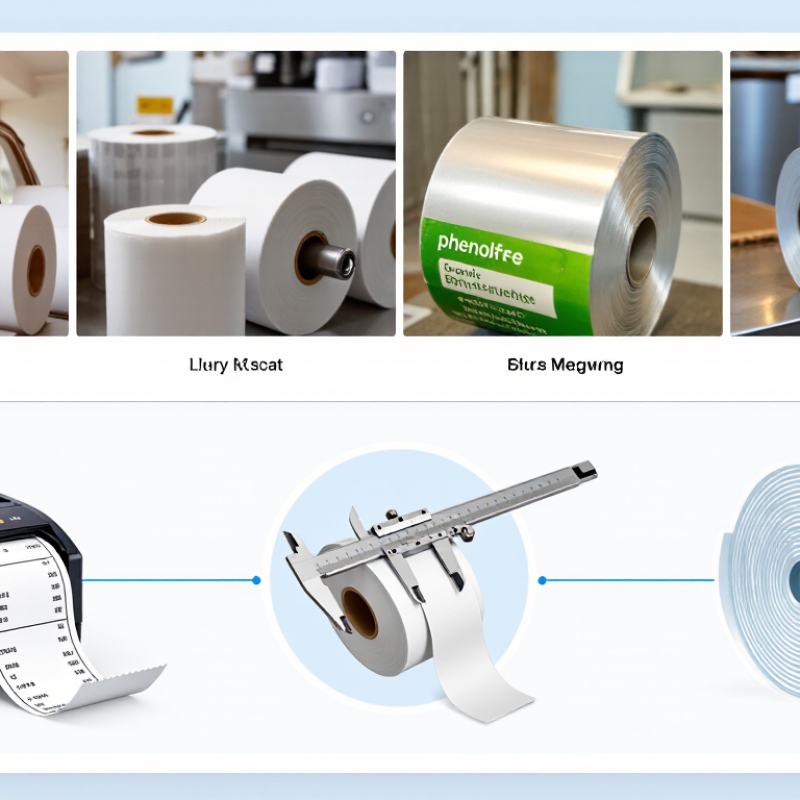
How Thermal POS Paper Works and What Global Buyers Should Know
2026 Top Thermal POS Paper Types for Global Buyers
How Thermal POS Paper Works and What Global Buyers Should Know
Thermal POS paper uses heat, not ink, to create receipt images. Its base sheet carries a heat-sensitive coating, usually containing a color-forming dye and developer. When heated pixels touch the coating, the treated areas darken. No ink cartridge. This direct-thermal process keeps checkout printing quiet and simple, but the image can fade with heat, sunlight, oils, or plasticizers.
Grand View Research’s 2024 thermal-paper market report estimated the global market at about US$4.2 billion in 2023, with projected annual growth of roughly 5% through 2030. The estimate signals broad demand, not uniform quality across suppliers.
For global purchasing, match roll width, diameter, core size, and paper caliper to the printer and dispenser. A roll that looks right may still jam or leave pale print. Test samples at actual checkout speed; inspect contrast, curl, edge dust, and feed consistency.
Ask suppliers for coating and chemical disclosures, image-retention conditions, and storage guidance. Specifications matter. I treat “long-life” claims cautiously: warm warehouses and shop-window light can shorten receipt readability, even when paper passes a controlled test. Compare samples after exposure, not just straight from the carton.
Key Performance Factors for Comparing Thermal POS Paper
Thermal POS paper is not a single grade. Standard direct-thermal rolls often suit receipts kept briefly, while top-coated paper can better resist moisture, oils, and handling. Longer-life grades may retain images longer under suitable storage, but no coating makes a receipt immune to heat or sunlight. Check the supplier’s stated conditions.
Compare coating performance alongside paper thickness, roll width, core size, and roll diameter. A roll that feeds poorly can cause jams, even if its print quality looks excellent. Print sensitivity matters too: paper that needs more heat may slow printing or strain a printer’s energy budget. That matters.
Test samples in the actual POS printer. Check small text, barcode readability, and whether the print stays dark after routine handling. Inspect for dust and uneven coating; both can affect printheads over time. It is easy to overvalue a bright, smooth surface, but that can be a poor shortcut. Store samples in warm, humid conditions if shipments will cross varied climates. A specification sheet can still miss real-world differences, so compare more than one batch before setting a purchasing standard.
Top Thermal POS Paper Types by Use and Specification
Thermal POS paper should be selected by use, not just price. Standard receipt rolls work well for quick transactions in shops and cafés. Common widths include 57 mm and 80 mm, but the printer manual is the safest reference. Check roll diameter and core size too. A roll that looks right may not fit the printer compartment.
For longer-lasting receipts, consider paper with a protective top coating. It can better resist handling, light moisture, and oils, though no thermal receipt is permanent. Kitchen printers need paper that feeds reliably during busy service; darker printing may help staff read tickets at a glance. Mobile terminals often need narrower, smaller rolls to keep devices light. There is a catch. Higher sensitivity can produce a clear image with less printer heat, but compatibility still matters. For each option, compare basis weight, thickness, coating, and tested printer compatibility. Store cartons away from heat and direct sunlight. I would not rely on a specification sheet alone; test a sample roll in the actual printer, since paper curl and feed behavior can surprise you.
2026 Top Thermal POS Paper Types for Global Buyers - Top Thermal POS Paper Types by Use and Specification
| Paper Type | Typical Use | Common Specifications | Key Characteristics | Buyer Checks |
|---|---|---|---|---|
| Standard Direct Thermal Receipt Paper | Retail checkout, cafés, restaurants, and everyday payment receipts | Common widths: 57/58 mm and 80 mm; typical basis weights around 48–55 g/m²; roll diameter and core size vary by printer | General-purpose, heat-sensitive coating forms an image when activated by the printhead; usually supplied as single-ply paper | Confirm paper width, maximum roll diameter, core inner diameter, winding direction, and printer compatibility |
| Top-Coated Thermal Receipt Paper | Busy retail counters and receipts exposed to more handling or occasional splashes | Often available in 57/58 mm and 80 mm widths; basis weight commonly varies by product, with many grades in the approximately 55–80 g/m² range | A protective layer can improve resistance to moisture, oil, abrasion, and handling compared with an unprotected grade; performance depends on the coating and test conditions | Request product-specific resistance and image-retention test data; top coating does not make receipts waterproof or permanent |
| BPA-Free Thermal Paper | Retail and food-service receipts where buyers specify no intentionally added bisphenol A | Available in common receipt widths, including 57/58 mm and 80 mm; basis weight and roll dimensions are grade-specific | “BPA-free” describes a chemical specification, not a paper weight or print-performance grade; the developer chemistry may differ between products | Check the supplier’s written chemical declaration and applicable market requirements; BPA-free does not necessarily mean phenol-free |
| Phenol-Free Thermal Paper | Receipt programs requiring a broader restriction on phenolic developers | Width, basis weight, roll diameter, and core are selected to match the printer and the supplier’s available grade | “Phenol-free” is a chemical claim whose scope and verification can vary; it does not by itself specify image life or coating durability | Ask which substances are excluded and request supporting documentation; do not treat “BPA-free” and “phenol-free” as interchangeable claims |
| Mobile POS Thermal Paper | Handheld payment terminals, delivery devices, and compact mobile receipt printers | Often narrow rolls around 57/58 mm; compact roll diameter and core dimensions are printer-specific | Designed for portable devices with limited roll space; lighter paper can help accommodate more paper within a compact roll | Match the exact device requirements, including roll width, outer diameter, core, and any required end-of-roll indicator |
| Kitchen and Food-Service Thermal Paper | Kitchen order tickets, food-service counters, and service-area receipts | Commonly used in 80 mm receipt printers, although printer formats vary; basis weight and roll capacity depend on the application | Direct thermal printing avoids ink or ribbon; heat, steam, grease, and frequent handling can affect printed-image readability | Choose a grade suited to the exposure conditions and confirm the printer’s supported roll dimensions |
| Kiosk and Self-Service Thermal Paper | Ticketing, queue systems, payment kiosks, and unattended terminals | May use 80 mm or other printer-specific widths; longer rolls and larger outer diameters are possible where the kiosk supports them | Roll capacity and dependable feeding are important for reducing replenishment frequency; long-term image retention varies by grade and storage conditions | Verify maximum roll diameter, core fit, paper thickness, feeding requirements, and the expected storage life of the printed output |
| Direct Thermal Label Stock | POS price labels, deli or produce labels, and scale-printed labels | Supplied in printer-specific label widths and formats; constructions may include an adhesive layer and a release liner, or a linerless format | Made for compatible direct-thermal label printers rather than ordinary receipt printers; adhesive and face-stock performance vary by application | Confirm printer type, label dimensions, gap or mark sensing, adhesive requirements, and whether the printer accepts linerless media |
Specification note: Widths and basis-weight ranges are common market examples, not universal standards. Always match roll diameter, core size, paper thickness, and media format to the specific printer. Printed-image life depends on the paper grade, heat and light exposure, humidity, and storage conditions.
How to Match Paper Grades to POS Printers and Markets
Thermal paper selection starts with the printer’s requirements, not the destination market alone. Check the manual for roll width, core size, maximum diameter, and supported paper thickness. Direct thermal printers need heat-sensitive paper and no ribbon. For busy checkout counters, a standard grade can work well when receipts are brief and kept dry. Top-coated grades resist moisture, oil, and handling better. They suit kitchens, delivery counters, and receipts that must remain readable longer. Test the actual printer. A paper that looks right can still print faintly or curl.
Market demand makes grade choice a practical purchasing issue. IMARC Group’s 2024 thermal paper market report estimated the global market at about US$4.3 billion in 2023. That figure signals broad use, but it does not mean every market needs the same roll. In humid regions, prioritize coating protection and sealed packaging. For cold-storage workflows, confirm that the grade performs at the printer’s operating temperature. Ask suppliers for sample rolls and compare print darkness, feed reliability, and image retention under real storage conditions. Small test. Big difference.
Paper weight alone is not a reliable quality measure; coating uniformity and sensitivity also affect print results. ASTM test methods can help buyers specify measurable properties instead of relying on vague terms such as “premium.” Keep one detail in mind: storage conditions after printing matter, too. I would still verify samples before placing a large order.
Global Sourcing, Compliance, and Storage Considerations for 2026
2026 Top Thermal POS Paper Types for Global Buyers
Global Sourcing, Compliance, and Storage Considerations for 2026
Global buyers choosing thermal POS paper in 2026 should compare more than price. Confirm roll width, diameter, core size, and paper weight against each printer model. Ask suppliers for current technical data and batch-level test records. Requirements vary by destination, so check applicable chemical restrictions, labeling rules, and documentation with local compliance specialists. A generic “compliant” statement is not enough.
Tips: Request samples from each shortlisted supplier. Test print clarity, feed smoothly, and check that the roll fits your device. Keep written specifications; small differences can cause avoidable delays.
For cross-border sourcing, clarify lead times, packaging, and how production batches are identified. If possible, qualify a backup supplier using the same specifications. Consistency matters, though it can be harder to maintain than a low quoted price. Store rolls in their original packaging, away from sunlight, heaters, and damp floors. Heat and moisture can fade images or affect paper performance. Use older stock first, and inspect a sample after long storage. These checks help, but they do not replace destination-specific verification.